01
More view, less frame
Large sliding panels can reduce the number of vertical interruptions across an opening, giving architecture more glass and a clearer relationship to the view.

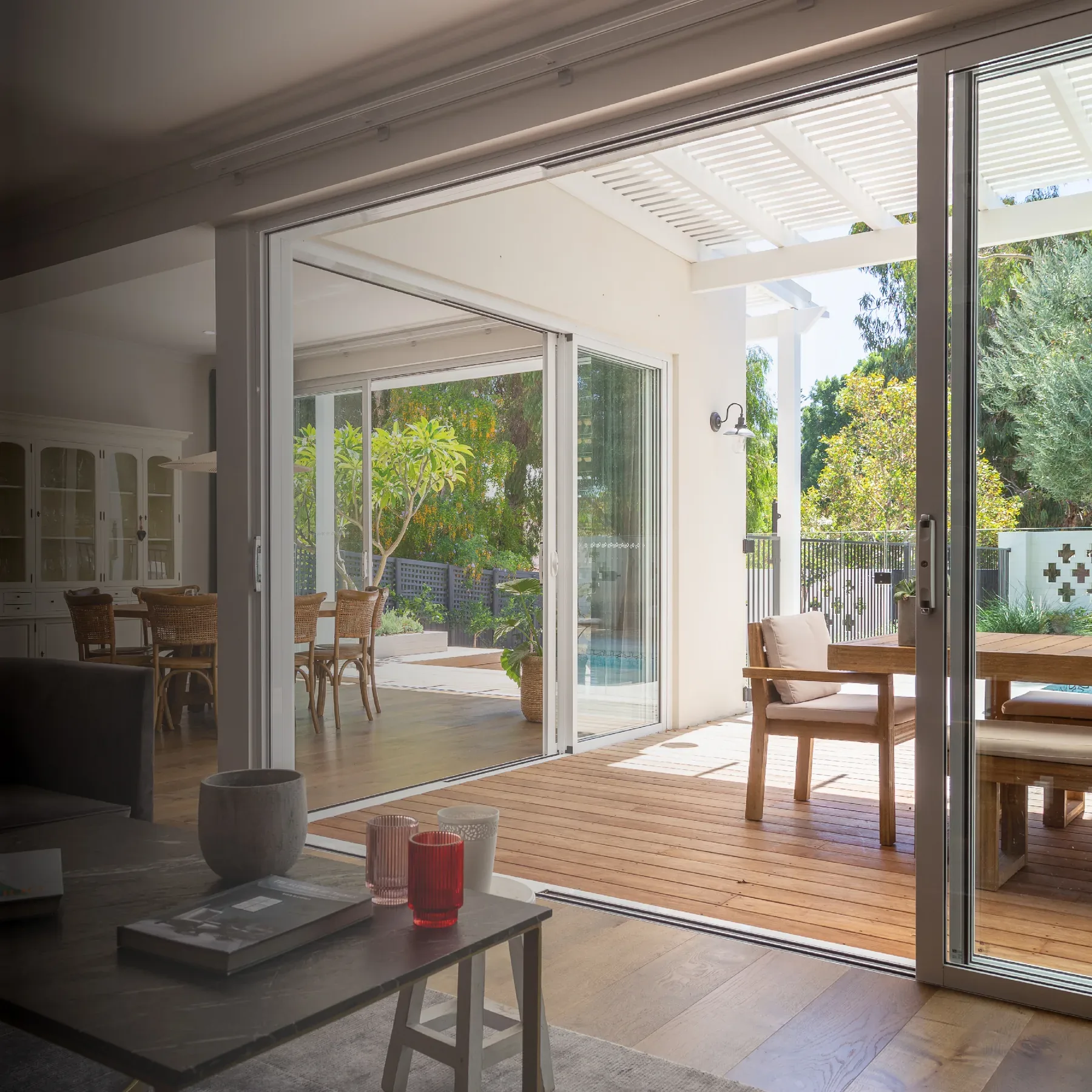
Sliding doors are compelling because the panel moves out of the way without swinging into the room. That simple geometry creates unusually large glazed areas, calm elevations and a natural fit for balconies, decks and big views.
The opening type changes the way a room looks and behaves before any individual piece of hardware is chosen.
Large sliding panels can reduce the number of vertical interruptions across an opening, giving architecture more glass and a clearer relationship to the view.
The panel travels parallel to the wall or adjacent panel, so it does not consume balcony, deck or interior floor space when opening.
Large glazed panels can devote a greater share of the opening to glass. In a well-designed system, that can help whole-opening thermal performance track more closely to the glazing performance than frame-heavy configurations.
Interlocking stiles, continuous seals and drained track geometry give sliding systems a strong foundation for air and water control when the complete system is designed and tested properly.
A slider stays where it is moved without a door leaf projecting into the space or needing a separate hold-open. That is useful for parties, cross-ventilation and everyday indoor-outdoor living.
Multi-panel sliders can stack to one side, and systems designed early enough can pocket into a wall cavity so the opening can become visually almost complete.
View-driven homes, apartments and balconies, large glazed walls, indoor-outdoor living, spaces where swing clearance is precious, and openings that may stack or pocket.
Threshold and drainage strategy, accessibility, panel mass, screen integration, track cleanliness, pocket access for service and how the seals influence operating force.
Once the architectural intent is clear, these are the mechanical relationships that determine whether the opening still feels good years later.
How wheel arrangement and roller architecture share panel load across the track.
Bearing efficiency, wheel material, alignment, seals and panel geometry all contribute to what the user feels.
Wheel profile, track surface and contamination influence wear, noise and smoothness.
Real openings are not perfect. Hardware has to allow the installed system to be aligned and maintained.
Guides, anti-lift features and supporting hardware manage lateral movement and unwanted freedom.
The roller is only one part of the motion system; mating profiles, drainage, seals and surrounding hardware matter.
Mother of All Rollers is CiiLOCK's flagship body of sliding-roller technology. TITAN also carries specialist top-hung sliding hardware for architectural systems.
CiiLOCK develops hardware and motion technology. Local fabricators turn that technology into complete windows and doors. If you are an architect or homeowner, we can help connect the project to a suitable local contact where our network allows.
Tell us the opening type, location and project stage. We will help point you toward a relevant local fabricator or partner where available.
Find local expertise ->02 / Fabricators + system makersWork with CiiLOCK motion technologies, specialist brands and engineering support while keeping the complete fabricated system in your hands.
Join the network ->Homeowners and architects can start with a local Motioneer or partner where available. Fabricators and system manufacturers can talk directly to CiiLOCK about hardware, integration and engineering.