01
Immediate everyday access
A single hinged leaf gives direct passage with no need to move a panel train or uncover an opening in stages.

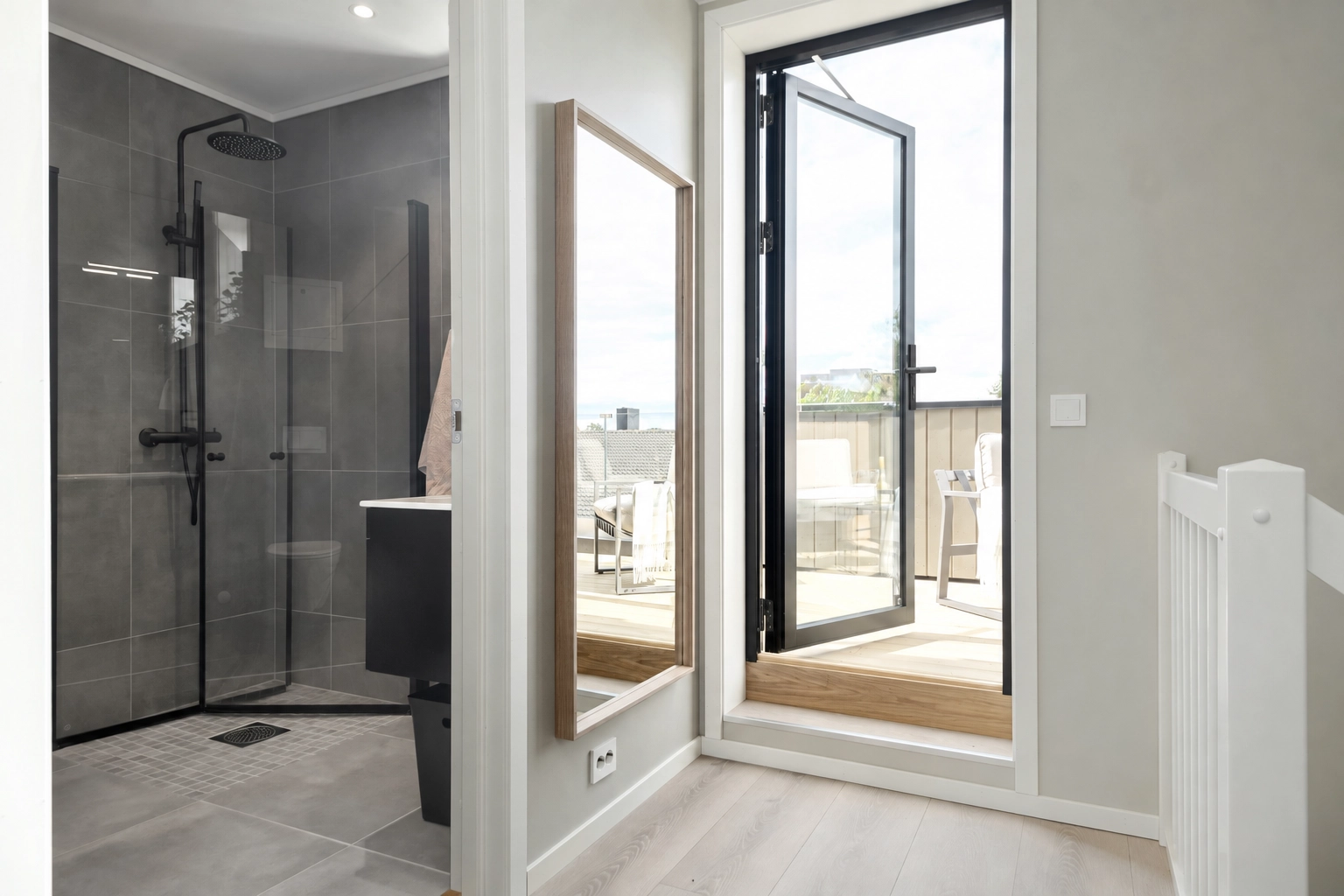
The familiar hinged door remains one of architecture's most useful mechanisms: direct, intuitive and capable of closing firmly into seals. Pivot systems take rotational motion further, allowing larger panels and a more deliberate architectural gesture.
The opening type changes the way a room looks and behaves before any individual piece of hardware is chosen.
A single hinged leaf gives direct passage with no need to move a panel train or uncover an opening in stages.
A hinged leaf can close against compression seals around the perimeter, making the format well suited to demanding weather and acoustic strategies when the complete system is designed correctly.
People understand a hinged door instantly. Handles, latches, closers and access hardware can be integrated around a well-established movement.
Where the opening does not justify a multi-panel system, a hinged door can be mechanically simple, robust and economical.
Moving the rotational axis away from the jamb can transform a large panel into a deliberate architectural element and change the balance of opening force.
Large pivot or hinged panels can reduce the number of panel joints, creating a strong, simple visual statement when structure and hardware support it.
Entrances, everyday access doors, narrow openings, high-seal applications and statement doors where a large single panel is part of the architectural idea.
Swing clearance, wind loads on an open leaf, closer or hold-open behaviour, finger clearances, hinge or pivot load paths, adjustment and the surrounding structure.
Once the architectural intent is clear, these are the mechanical relationships that determine whether the opening still feels good years later.
Pivot locations and link geometry determine movement, clearance and the feel of the panel.
Weight must move through pins, bearings, fixings and surrounding structure without losing alignment.
Useful adjustment helps the installer correct real-world tolerances without compromising the mechanism.
Gravity, spring or other mechanisms can influence opening, return and hold positions.
Hinged hardware has to cooperate with locks, latches and seals across the full motion.
Architectural systems often demand hardware that does its job without becoming the visual focus.
PIVOTRON is the emerging specialist identity for CiiLOCK's hinge and pivot technologies, including the broader family of ideas around controlled hinged motion, adjustment and load.
Explore PIVOTRON ->CiiLOCK develops hardware and motion technology. Local fabricators turn that technology into complete windows and doors. If you are an architect or homeowner, we can help connect the project to a suitable local contact where our network allows.
Tell us the opening type, location and project stage. We will help point you toward a relevant local fabricator or partner where available.
Find local expertise ->02 / Fabricators + system makersWork with CiiLOCK motion technologies, specialist brands and engineering support while keeping the complete fabricated system in your hands.
Join the network ->Homeowners and architects can start with a local Motioneer or partner where available. Fabricators and system manufacturers can talk directly to CiiLOCK about hardware, integration and engineering.