01
Near-full-width opening
Because the panels fold and stack, a bifold can clear much more of the structural opening than a conventional two-panel slider.

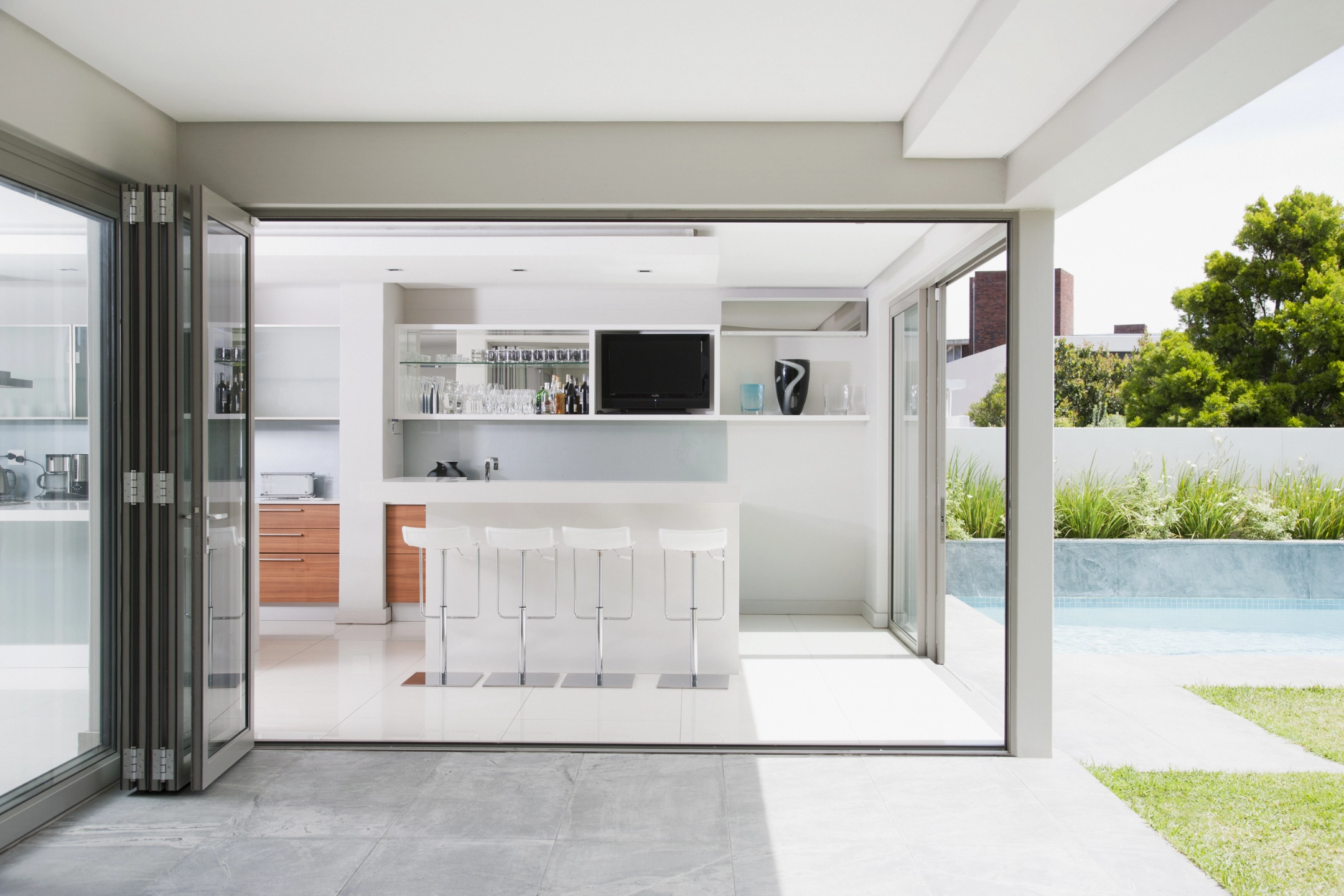
Bifold doors are at their best when the goal is not merely a big view, but a big opening. Linked panels fold and stack to one side so a room, terrace, restaurant or living space can change character in seconds.
The opening type changes the way a room looks and behaves before any individual piece of hardware is chosen.
Because the panels fold and stack, a bifold can clear much more of the structural opening than a conventional two-panel slider.
When open, the boundary can become broad and social rather than simply a doorway - useful for entertaining, hospitality and garden connections.
Multiple panels gather into a relatively compact stack instead of requiring the full width of each panel to slide behind another.
Many configurations can include a traffic or access leaf, allowing quick daily entry without opening the entire panel set.
Top-hung bifolds carry panel weight at the head, which can reduce visible floor hardware and support cleaner threshold detailing where the complete system permits.
Depending on the system, panels can fold inward or outward and be arranged in different counts to suit room layout, furniture and the desired stack position.
Large entertaining openings, restaurants and hospitality, family living areas, flexible room divisions and projects where the open state should feel as close as possible to removing the wall.
Panel stack location, head support, adjustment range, threshold and drainage, the number of moving joints and seals, and the greater amount of framing visible when closed compared with very large sliders.
Once the architectural intent is clear, these are the mechanical relationships that determine whether the opening still feels good years later.
Carriers and overhead structure can remove floor obstructions while placing different demands on the head track.
Rolling hardware must carry load while allowing a linked panel train to move consistently.
Geometry determines how panels articulate, stack and maintain alignment.
Guidance hardware controls the free end of the system and manages unwanted lateral movement.
Installation tolerances and panel settlement need controlled methods of correction.
Multiple interfaces operate every cycle, making material choice and wear behaviour important.
TITAN is CiiLOCK's specialist architectural doorware platform for bifold and top-hung door systems. Its dedicated site carries system choices, hardware detail, drawings and integration information.
Explore TITAN Bifolds ->CiiLOCK develops hardware and motion technology. Local fabricators turn that technology into complete windows and doors. If you are an architect or homeowner, we can help connect the project to a suitable local contact where our network allows.
Tell us the opening type, location and project stage. We will help point you toward a relevant local fabricator or partner where available.
Find local expertise ->02 / Fabricators + system makersWork with CiiLOCK motion technologies, specialist brands and engineering support while keeping the complete fabricated system in your hands.
Join the network ->Homeowners and architects can start with a local Motioneer or partner where available. Fabricators and system manufacturers can talk directly to CiiLOCK about hardware, integration and engineering.